
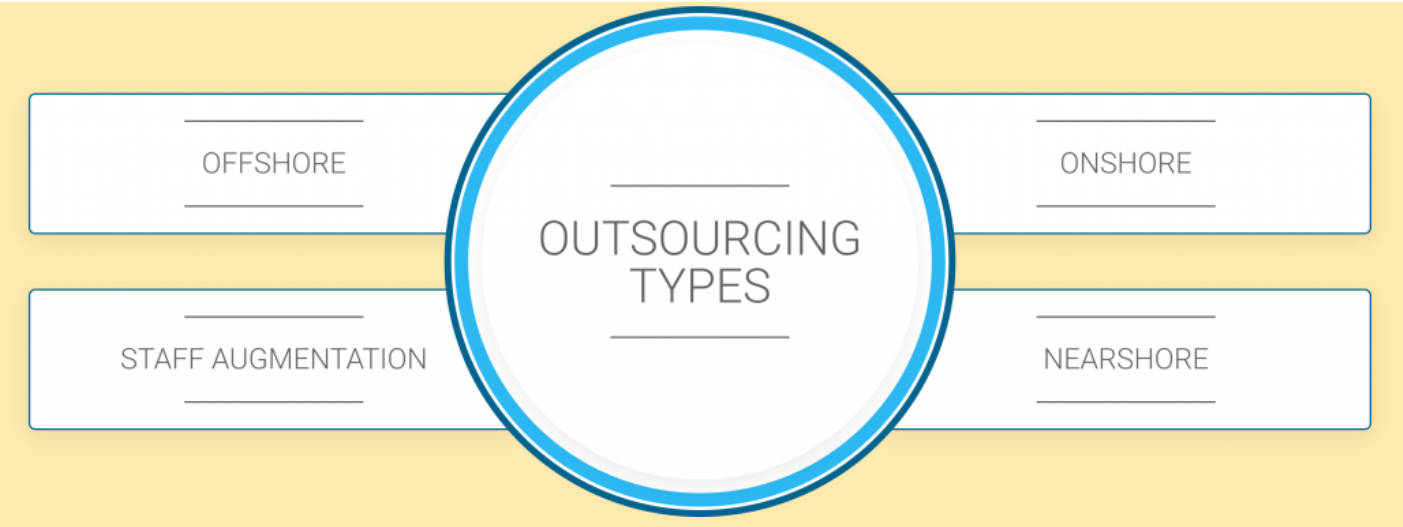
Onshore, Offshore, Nearshore, or Staff augmentation: What outsourcing options suit your business best?
For many companies, having an internal software development team is a real challenge. They imply high costs and long hiring processes. However, even if the companies have resources to maintain in-house development teams, this is a great way to cut costs. This is where a dedicated software development team business model comes in.
There is no such thing as “perfect services” or “perfect solutions”. But outsourcing can become a real blessing when a company finds the right provider.
A significant part of our clients came to us after experiencing outsourcing with other providers. (As you may predict, not always good experiences.) And each new client came with his specific pain-points related to the development process, the team, the technologies or the methodologies used by the outsourcing provider.
Criteria to consider while analyzing which one fits best your company’s needs:
- quality of the services;
- quality-costs ratio;
- communication system;
- business scalability.
Onshore outsourcing
Onshore software development means choosing a provider that is close to your office (located in your home country).
Top benefits:
- working culture similarities;
- common language;
- transferred liability;
- same time zone;
- fast direct interactions;
- skilled teams from your country.
The most common pain-points related to this outsourcing type are:
- higher costs;
- limited providers choices – limited skill set;
- infrastructure cost for additional teams.
But these challenges can be overcome by negotiating the working terms through a cross-promotion offer (cross recommendations, referrals to other clients, etc.)
Offshore outsourcing
Offshore means working with a software development provider outside your country, usually from a different time zone.
Top benefits:
- significantly reduced costs;
- full disponibility;
- transferred liability;
- no legal issues bottlenecks;
- wide-range of skills;
- great cost-quality balance;
- higher scalability;
- higher adaptability to dynamic requirements.
The most common pain-points related to this outsourcing type are the communication differences (if it is not used a common language, such as English), cultural differences (depending on the country), different time zones (depending on the country), and quality control is more complex.
These challenges can be overcome by choosing a provider that is in the same time zone as you (or with small differences) and that manages teams able to communicate easily in a known language (e.g., English).
Nearshore outsourcing
Nearshore outsourcing means working with a provider that is located in a neighboring country to yours.
Top benefits:
- same time zones;
- good cost-quality ratio;
- transferred liability;
- fast direct interactions.
The most common pain-points:
- different working culture;
- communication barriers;
- infrastructure.
These challenges can be overcome by choosing a provider that manages teams able to communicate easily in a known language (e.g., English) and check his portfolio to see if his development vision is the same as yours.
Staff augmentation
Staff augmentation means extending an existing team with external professionals to bring additional skills that are required for a specific project.
Benefits:
- high flexibility;
- no recruitment investments;
- lower expenses;
- performant staff management.
The most important issue may be data privacy. To avoid any risks, make sure NDA contracts and rules protect your data.
From the team management perspective, you must consider working with PMs (project managers) who have previous experience working with additional staff.
Are you looking for a reliable dev team provider? Find out more about our services with dedicated development teams and get a custom estimate for your project.